
Procedure
Root Canal Treatment
Save an infected or badly decayed tooth instead of pulling it.
In short
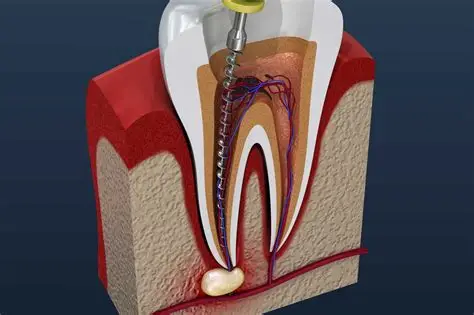
Root canal treatment removes infected or inflamed tissue from inside a tooth, cleans and seals the canals, and keeps the natural tooth rather than extracting it. At Somosot Dental it is commonly completed over two or more appointments. The price depends on the tooth: ₱4,500 for an anterior tooth, ₱8,000 for a premolar, ₱15,000 for a molar. The final restoration — the filling, build-up, post or crown that goes on afterwards — is charged separately, and back teeth commonly need a crown.
Overview
Root canal treatment (endodontic therapy) removes infected or inflamed tissue from inside a tooth, cleans and seals the canal, and preserves the natural tooth instead of extracting it. It is typically considered when decay or a crack has reached the tooth's nerve. Treatment at Somosot Dental is commonly completed over two or more appointments.
Who may benefit
- A tooth with deep decay reaching the nerve
- Persistent tooth pain, especially with hot or cold sensitivity that lingers
- A cracked or injured tooth that's become infected
When it may not be suitable
- The tooth cannot be restored afterwards. If too little sound tooth structure remains, extraction and a replacement may be the better plan.
- The case is complex enough to need specialist care. Complex cases may be referred to an endodontist or another suitable specialist rather than treated here.
- A different treatment fits the finding. The examination decides between pulp treatment, root canal treatment, extraction and other options — that is what the appointment is for.
Examination and records normally required
- An examination of the tooth and the tissue around it
- The required X-rays — a periapical X-ray is ₱500
- Your medical history and any medicines you take
How Somosot Dental approaches this
- The tooth is examined and X-rayed before anything is quoted, because the number of canals and their anatomy is most of what decides both the fee and the number of visits.
- Treatment is commonly staged over two or more appointments rather than compressed into one. Selected cases may be completed differently when that is clinically appropriate.
- The clinic is explicit about referring complex cases out rather than treating everything in-house by default.
Treatment stages
Examination & X-ray
Your dentist examines the tooth and takes the required X-rays. The dentist will evaluate whether pulp treatment, root canal treatment, extraction, or another treatment is appropriate. Complex cases may be referred to an endodontist or another suitable specialist.
Cleaning & shaping the canals
Local anesthesia is used to control discomfort. The inflamed or infected tissue is removed and the canals are cleaned and shaped.
Number of appointments
Treatment is commonly completed over two or more appointments. The number of visits depends on the tooth, the number and anatomy of its canals, the presence of infection, your symptoms, and how the tooth responds to treatment. Selected cases may be completed differently when clinically appropriate.
Sealing
Once the canals are ready, they are filled and sealed, and the tooth is prepared for its final restoration.
Final restoration
After root canal treatment, back teeth commonly require a crown or another cuspal-coverage restoration because they receive heavier chewing forces and may be more likely to fracture. The final restoration depends on the location of the tooth and how much healthy tooth structure remains.
Important limitations and risks
- A temporary filling is not the final restoration, and the tooth is not finished until the permanent one is placed.
- Mild tenderness afterwards is common. Severe pain, swelling or worsening symptoms are not, and should be reported.
- Local anesthesia controls discomfort during treatment, but the experience varies — a severely inflamed or infected tooth can be harder to numb.
- Root canal treatment is not a guarantee that a tooth is saved permanently. Back teeth in particular are more likely to fracture without cuspal coverage.
- The published prices do not include the final restoration.
What affects how long it takes
- The tooth itself, and how many canals it has
- The anatomy of those canals, including calcification
- Whether infection is present
- Your symptoms and how the tooth responds to treatment
- Whether the tooth has been root-treated before
What affects the price
- Which tooth it is — anterior ₱4,500, premolar ₱8,000, molar ₱15,000.
- The final restoration, charged separately. A zirconia crown is ₱20,000.
- Complexity found at examination: canal number and anatomy, calcification, infection, previous treatment, and the condition of the tooth.
- X-rays taken to diagnose and to check progress.
Pricing
- Root canal — anterior tooth
- ₱4,500
- Root canal — premolar
- ₱8,000
- Root canal — molar
- ₱15,000
- Final restoration (filling, build-up, post, or crown)
- Charged separately
Published prices are starting figures or ranges, not quotations. The price for your case is confirmed after an examination. See the full price list.
Aftercare
- Mild tenderness after treatment may occur and should gradually improve
- Take only the medication recommended or prescribed by the dentist
- Avoid chewing hard food on the treated tooth until the permanent restoration or crown has been completed
- A temporary filling is not intended to serve as the final restoration
- Return for the next appointment and final restoration as scheduled, even if the tooth no longer hurts
- Contact the clinic if pain or swelling becomes severe, symptoms worsen, the temporary filling comes out, or the tooth feels unusually high when biting
When to contact the clinic without waiting
- Pain or swelling that becomes severe
- Symptoms that are getting worse rather than settling
- The temporary filling coming out
- The tooth feeling unusually high when you bite
Frequently asked questions
Is it painful?
Local anesthesia is used to control discomfort during treatment. The experience varies from patient to patient, especially when a tooth is severely inflamed or infected. Mild tenderness after treatment is common, but severe pain, swelling, or worsening symptoms should be reported to the clinic.
How many visits will it take?
Root canal treatment at Somosot Dental is commonly completed over two or more appointments. The number of visits depends on the tooth, the number and anatomy of its canals, the presence of infection, your symptoms, and how the tooth responds to treatment. Selected cases may be completed differently when clinically appropriate.
How is the fee decided?
The appropriate treatment and final fee are confirmed after clinical examination and the required X-rays. Treatment complexity may depend on the number and anatomy of the canals, calcification, infection, previous root canal treatment, and the condition of the tooth. The permanent filling, build-up, post, crown, or other final restoration may be charged separately.
Do I still need a crown after?
After root canal treatment, back teeth commonly require a crown or another cuspal-coverage restoration because they receive heavier chewing forces and may be more likely to fracture. The final restoration depends on the location of the tooth and how much healthy tooth structure remains.
Information on this page is provided for general patient education and does not replace a clinical examination, diagnostic imaging, or an individualized treatment plan. Treatment suitability, procedure type, duration, fees, risks, healing, maintenance requirements, and results vary from patient to patient. Your dentist will discuss the appropriate options after evaluating your specific condition.
Editorial and clinical-review policy — how this site writes, reviews and corrects clinical information.
Ready to book, or have questions about your case?
We usually reply within a few hours during clinic hours.
Or see the Bohol clinic and Cebu clinic pages for addresses, hours and phone numbers.