
Procedure
Dental Implants
A fixed, natural-feeling replacement for a missing tooth.
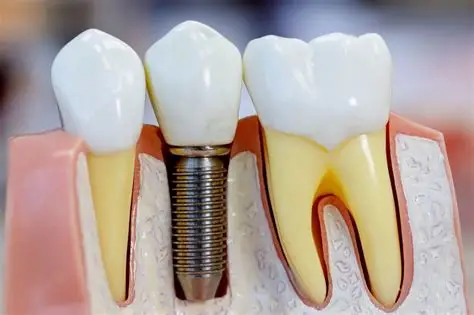
In short
A dental implant replaces a missing tooth root with a small titanium post placed into the jawbone, restored with a custom crown once it has integrated. At Somosot Dental it starts from ₱50,000, which covers the fixture and its placement — the crown fitted on top is priced separately from the crowns list, where a zirconia crown is ₱20,000, so a single tooth restored comes to about ₱70,000. Healing before the final crown commonly takes around 3–6 months, though it may be shorter or longer. Whether an implant is appropriate at all depends on an examination and imaging of the site, not on anything you can read here.
Overview
A dental implant replaces a missing tooth root with a small titanium post placed into the jawbone, restored with a custom crown once it has integrated. Unlike a bridge or denture, it doesn't rely on neighboring teeth for support. At Somosot Dental we use CBCT imaging and digital implant-planning technology to evaluate the available bone and nearby anatomical structures before recommending treatment.
Who may benefit
- Replacing a single missing tooth without altering neighboring teeth
- Patients who want a fixed (non-removable) replacement
- Anchoring a denture or bridge more securely
When it may not be suitable
- There is not enough bone at the site. The examination and CBCT assessment exist to establish this; some cases need bone grafting first, and some are better treated another way.
- You smoke or vape. Both interfere with healing and increase the risk of implant failure — this is worth discussing before treatment rather than after.
- Your general health or a medication affects healing. The dentist reviews your medical history before recommending an implant, which is why the list of what you take matters.
- A bridge or a denture would serve you better. An implant is one option for a missing tooth, not the only one, and the alternatives are part of the conversation.
Examination and records normally required
- A clinical examination of the site and the teeth either side of it
- 3D (CBCT) imaging, to assess the available bone and the position of nearby anatomical structures
- Your medical history and a list of the medicines you take
- Any X-rays or records a previous clinic gave you, including the USB copy
- Tell the clinic before any imaging if you are pregnant or think you may be
How Somosot Dental approaches this
- Implant cases are planned from the 3D scan rather than from a flat X-ray, so the available bone and the nearby anatomy are assessed before anything is decided.
- Where it is appropriate, the digital plan is used to design a customized surgical guide that helps transfer the planned implant position during surgery. Not every case is guided, and the approach may still be adjusted based on what is found clinically.
- The implant is evaluated for healing and stability before the final crown is placed. Immediate placement or a temporary crown may be considered in selected cases, but that cannot be promised in advance.
Technology at the Bohol branch
- Vatech Pax-i 3D — panoramic (OPG) and cone-beam CT (CBCT) in one unit, on site
- Cephalometric X-ray, on site
- Digital intraoral scanners, so most cases need no impression trays
- In-house dental laboratory
- DJ89 Plus 8K resin 3D printer, for models, surgical guides and provisionals
This equipment is at the Tubigon, Bohol branch. The Cebu branch's facilities list does not include on-site imaging or a laboratory — ask the Cebu branch what your case would need there before assuming a scan can be taken on site.
Treatment stages
Consultation & CBCT imaging
Your dentist examines the site and takes 3D (CBCT) imaging to assess the available bone and the position of nearby anatomical structures, and to confirm whether an implant is appropriate for your case.
Digitally guided planning
Using the digital treatment plan, we can design a customized surgical guide to help transfer the planned implant position accurately during surgery. We prefer a digitally guided approach whenever it is appropriate because it supports careful planning, precision, and more predictable implant positioning. Every case is different, and the final implant position and surgical approach may still need to be adjusted based on the actual clinical findings during the procedure.
Implant placement
Implant placement is normally performed under local anesthesia to minimize pain. Patients may still feel pressure, vibration, or movement during the procedure. Soreness, swelling, or minor bruising may occur afterward and normally improves during healing.
Healing & integration
After placement, the implant is normally allowed to integrate with the surrounding bone. Healing commonly takes around 3–6 months but may be shorter or longer depending on the implant location, bone quality, need for bone grafting, your general health, and your individual healing response.
Final restoration
In the conventional approach, the implant is allowed to heal before the final crown is attached. Immediate implant placement, a temporary crown, or immediate loading may be considered in selected cases when bone stability, bite, infection control, and other clinical conditions are favorable. The implant is evaluated for healing and stability before the final crown is placed.
Watch a guided implant case at this clinic
One case at the Bohol branch, recorded end to end: the CBCT scan, the surgical guide designed from it, placement through that guide, and the post-operative radiograph. The closing panel sets the planned position beside the achieved one. It is a single case shown for what it is, not a claim about how any other case will go — suitability, healing and the final position all depend on examination and imaging.
Publication on this website confirmed by the patient, recorded 2026-08-29.
Important limitations and risks
- Nothing here is a guarantee. Digital planning supports careful positioning; it does not make an outcome certain, and the final position may need to be adjusted during surgery.
- Implants can fail. Healing, bone quality, smoking, general health and how the implant is looked after all bear on it.
- Placement is done under local anesthesia to minimize pain. You may still feel pressure, vibration or movement, and soreness, swelling or minor bruising afterwards is normal.
- Same-day teeth cannot be promised before the examination. Immediate loading depends on bone stability, bite and infection control being favourable.
- The ₱50,000 figure is a starting point for the fixture and its placement. It is not the total cost of replacing a tooth.
What affects how long it takes
- Where in the mouth the implant is placed
- Bone quality at the site
- Whether bone grafting is needed first
- Your general health
- Your individual healing response
What affects the price
- The crown fitted on the implant, which is priced separately from the crowns list — a zirconia crown is ₱20,000.
- Imaging. A CBCT scan is ₱10,000 and includes the prints and a USB copy of the scan.
- Bone grafting, where the site needs it.
- The number of implants. The published figure is per implant.
Pricing
- Dental implant (fixture + placement)
- from ₱50,000
- Crown priced separately, from ₱20,000 — so a single tooth restored starts at about ₱70,000.
- Crown fitted on the implant (zirconia)
- ₱20,000
Published prices are starting figures or ranges, not quotations. The price for your case is confirmed after an examination. See the full price list.
Aftercare
- Follow all medications and instructions given by the dentist
- Choose soft foods and avoid chewing directly on the surgical area during the initial healing period
- Do not disturb the surgical area with the tongue or fingers
- Brush the surrounding areas gently and use a prescribed mouth rinse only as directed
- Avoid smoking and vaping — they can interfere with healing and increase the risk of implant failure
- Attend all scheduled follow-up appointments
- Contact the clinic if there is persistent bleeding, worsening swelling, fever, severe pain, discharge, altered sensation, or another concerning symptom
- The implant must be evaluated for healing and stability before the final crown is placed
When to contact the clinic without waiting
- Bleeding that does not settle
- Swelling that is getting worse rather than better
- Fever
- Severe pain
- Discharge from the surgical site
- Altered sensation in the lip, chin or tongue
Frequently asked questions
Does it hurt?
Implant placement is normally performed under local anesthesia to minimize pain. Patients may still feel pressure, vibration, or movement during the procedure. Soreness, swelling, or minor bruising may occur afterward and normally improves during healing.
How long does the whole process take?
Total treatment time varies from patient to patient. Healing commonly takes around 3–6 months but may be shorter or longer depending on the implant location, bone quality, need for bone grafting, your general health, and your individual healing response. Some patients may qualify for immediate implant placement or a temporary restoration, while others need several months of healing before the final crown can be attached.
Can I have a tooth on the same day?
Sometimes, but it cannot be decided in advance. Immediate implant placement, a temporary crown, or immediate loading may be considered in selected cases when bone stability, bite, infection control, and other clinical conditions are favorable. These options cannot be confirmed until the dentist has completed the necessary examination and imaging.
How is the implant position planned?
We use CBCT imaging and digital implant-planning technology to evaluate the available bone and nearby anatomical structures, and where appropriate we design a customized surgical guide to help transfer the planned position during surgery. The surgical approach may still be adjusted based on what is found clinically during the procedure.
Is the price all-in?
The quoted price is a starting point — your dentist will confirm the cost after evaluating your case, including any imaging or bone grafting needed.
Weighing the cost against a bridge or a denture? Our Bohol implant cost guide breaks the total down item by item, covers what is charged separately, and sets out what an assessment has to establish before anyone can quote your case.
Information on this page is provided for general patient education and does not replace a clinical examination, diagnostic imaging, or an individualized treatment plan. Treatment suitability, procedure type, duration, fees, risks, healing, maintenance requirements, and results vary from patient to patient. Your dentist will discuss the appropriate options after evaluating your specific condition.
Editorial and clinical-review policy — how this site writes, reviews and corrects clinical information.
Ready to book, or have questions about your case?
We usually reply within a few hours during clinic hours.
Or see the Bohol clinic and Cebu clinic pages for addresses, hours and phone numbers.